Miss Flora and Her Place in Miami County History
The River at the Heart of Miami County
The Marais des Cygnes River gave Miami County much of its early character. French fur traders named it — the phrase translates roughly as “Marsh of Swans” — and the name recalled the waterfowl that once crowded its bottomlands when the first Europeans passed through eastern Kansas. By the time American settlement took hold in the 1850s, the river had already been a travel corridor and trade route for generations.
The Marais des Cygnes flows from west to east across Miami County, passing through Paola and Osawatomie before crossing into Missouri, where it joins the larger Osage River system. Its bottomlands were among the most fertile in the region, and its channel — navigable at certain seasons for flat-bottomed craft — made it a modest artery of commerce in the county’s early years. It was in this context, somewhere along the river’s banks or upon its currents, that a name appears in local historical records: Miss Flora.
A Name in the Record
The name Miss Flora surfaces in the scattered documentation of 19th-century Miami County — local newspaper notices, county histories, and the informal record-keeping of a frontier community. Such references are not always accompanied by full explanation. Names in early Kansas records often appear without the context that would make their significance immediately clear, and Miss Flora is no exception.
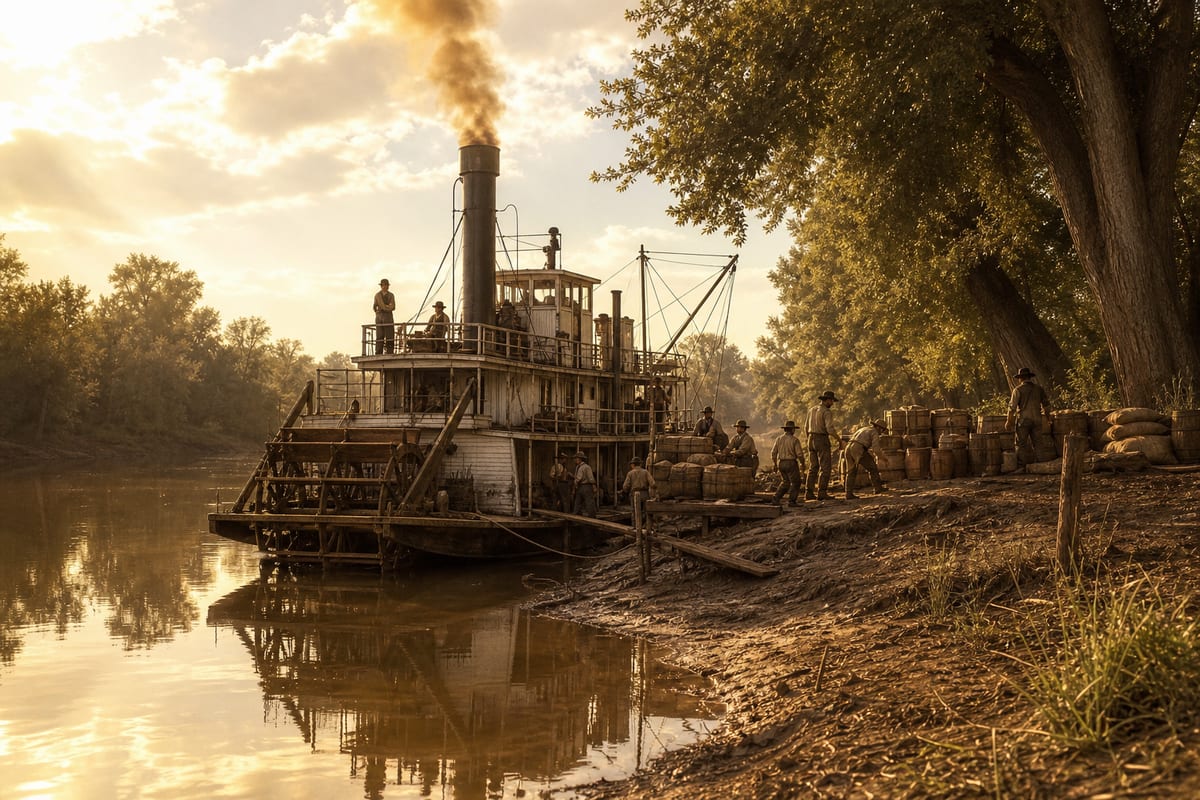
The name fits the naming conventions of the era. Flat-bottomed riverboats and small commercial craft on Kansas waterways were commonly given feminine names — a tradition carried west from the river towns of Missouri and the broader Mississippi-Ohio river culture. A craft named Miss Flora working the Marais des Cygnes would have served the practical needs of early Miami County commerce: moving farm goods, supplies, and passengers along the river when roads were poor and distances were long.
Alternatively, the name may have belonged to a local woman of some note — a teacher, a landowner’s daughter, a businesswoman — whose story was vivid enough to be remembered locally but not prominent enough to make the formal record that later historians consulted most heavily. Miami County’s early history is full of such figures: people whose names appear once or twice in newspaper columns or court records, whose lives shaped their communities, and whose stories require patient reconstruction from fragmentary sources.
Commerce on the Marais des Cygnes
Whatever specific story Miss Flora’s name preserves, it belongs to a broader chapter of Miami County history: the period when the Marais des Cygnes was a working waterway. Before the railroads arrived in the 1860s and 1870s, the river offered something eastern Kansas lacked almost everywhere else — a means of moving bulk goods without depending entirely on roads that turned to mud in wet weather.
Farm produce, timber, and stone moved along the river and its tributaries. Trading posts and small commercial operations established themselves at river landings and crossing points. Paola’s founding in 1855 was tied in part to its position near the river, and the early commercial life of the county seat reflected the Marais des Cygnes’ role as a transportation corridor.
The boats that worked these waters were modest craft — nothing like the great steamboats of the Missouri and Mississippi. Flat-bottomed skiffs and keelboats suited to shallow, variable water were more typical. They required experienced handlers who knew the river’s seasonal changes, its snags and shoals, its reliable channels and its flood-prone bottomlands.
The Railroad Ends the River Era
The arrival of the railroads fundamentally changed Miami County’s commercial geography. The Missouri-Kansas-Texas Railway and other lines that reached the county in the 1860s and 1870s offered year-round, weather-independent transportation that river transport could not match. Goods that had moved by water began moving by rail, and the economic rationale for maintaining river commerce largely disappeared.
By the 1880s, the Marais des Cygnes had reverted to its more purely natural role — a boundary, a source of water for farms and mills, a fishing ground, and a landmark in the county’s geography. The names associated with its commercial era — boat names, landing names, the names of merchants and freighters who worked its banks — faded from active memory and passed into the custody of local historians and county record-keepers.
Miss Flora belongs to that fading era. The name is a small preserved piece of the 19th-century world along the Marais des Cygnes — a reminder that Miami County’s early history involved not only the dramatic episodes that appear in textbooks, but also the everyday commerce, movement, and enterprise of ordinary frontier life along a river with a French name that Kansas farmers had mostly stopped translating.
Preserving the Record
The Kansas State Historical Society holds the newspaper archives and county history volumes most likely to contain fuller references to Miss Flora and similar names from Miami County’s past. The Miami County Historical Society in Paola maintains local collections that complement the state archives. For researchers tracing the commercial and social history of the Marais des Cygnes corridor, these collections offer the best opportunity to recover the stories behind the names that early residents thought worth recording.