The History of Louisburg, Kansas — Miami County's Southern City
Founded on the Katy Line
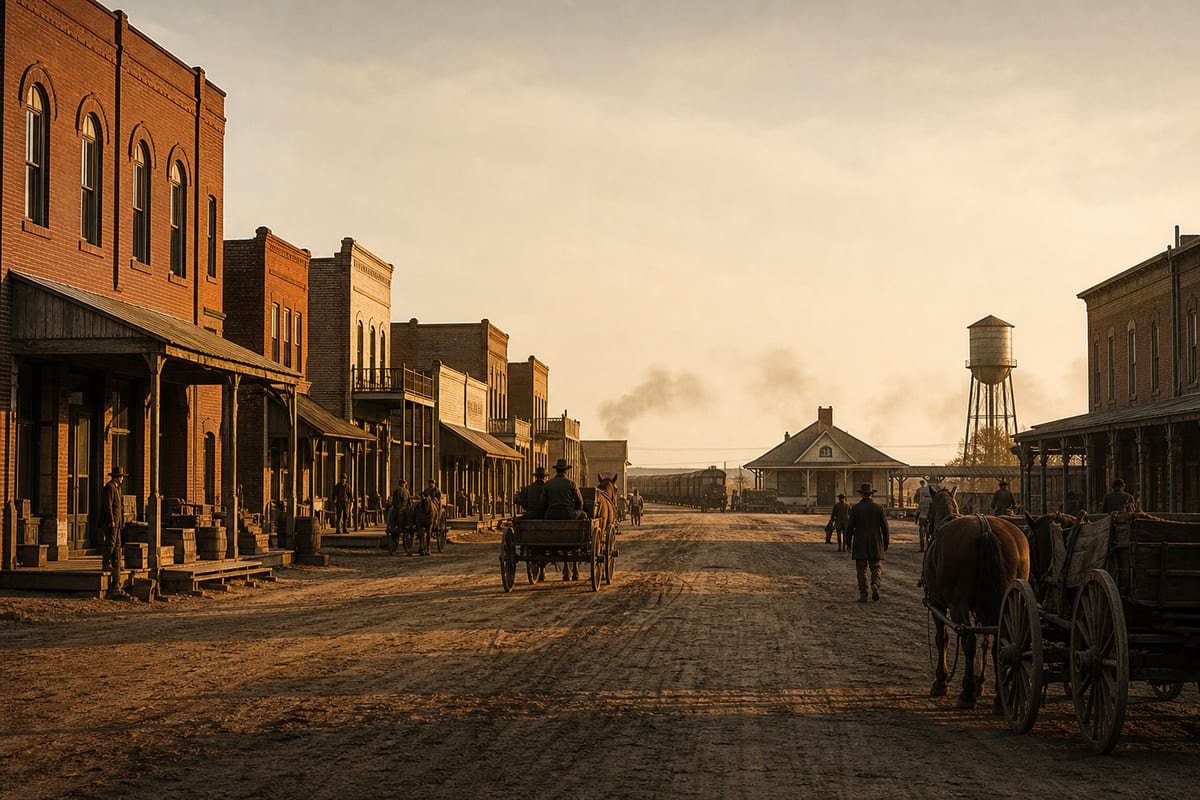
Louisburg, Kansas lies in the southern third of Miami County, on US Highway 69 about twenty-five miles south of Kansas City. Louisburg owes its existence to steel rails. Before the Missouri, Kansas and Texas Railway laid its tracks through southern Miami County in the early 1870s, the land that would become Louisburg was unbroken prairie and scattered farmsteads. The MKT — popularly known as the Katy — was pushing southward through eastern Kansas as part of the broader postwar railroad expansion that transformed the region’s economy and settlement patterns.
The town was platted in 1879, positioned to take advantage of the shipping point the Katy line offered. The name honored Louis Wolfsberg, a local landowner who donated property for the townsite — a common arrangement on the Kansas frontier, where railroad companies and landowners negotiated the locations of depots and town plats. A depot, a grain elevator, and a cluster of commercial buildings constituted the essential infrastructure of a new Kansas railroad town, and Louisburg acquired all three within its first years.
Southern Miami County was already developing an agricultural identity at the time of Louisburg’s founding. Paola, the county seat, served the northern and central portions of the county, but farmers in the southern townships faced a longer haul to reach it. Louisburg’s depot gave southern Miami County farmers direct access to rail shipping, reducing the cost and difficulty of moving grain and livestock to market.
Railroad Commerce and Agricultural Life
The years following Louisburg’s founding brought the commercial development typical of a functioning Kansas county town. Merchants established general stores and hardware operations. A post office opened. Churches arrived — Methodist, Baptist, and Christian congregations established by the farm families who settled the surrounding townships.
Grain shipments moved northward through Louisburg to Kansas City and beyond. Livestock — particularly hogs and cattle fattened on local corn and grass — moved to Kansas City meatpacking facilities via the rail line. The seasonal rhythms of the agricultural economy translated directly into the rhythms of the depot.
The land surrounding Louisburg supported productive diversified farming. The Osage cuesta country of southern Miami County — gently rolling terrain with fertile soils derived from limestone bedrock — proved well suited to wheat, corn, and livestock operations. The orchard culture that would eventually produce Louisburg’s most recognized institution also took root in the late nineteenth century. Apples stored well, processed into cider and vinegar for home use and sale, and required less immediate marketing urgency than grain or livestock. Farm orchards were a common feature of the agricultural landscape in the Louisburg area from the county’s earliest decades.
The Louisburg Cider Mill
The institution most closely associated with Louisburg in contemporary awareness is the Louisburg Cider Mill, an operation that has grown from a local cider-making tradition into one of the most visited agritourism destinations in the Kansas City region. The mill produces apple cider using traditional pressing methods and has expanded its product line to include cider donuts — a regional specialty that draws seasonal visitors from across the metropolitan area — alongside other apple-based products.
The seasonal character of the cider mill’s operations — apple harvest running from roughly late August through October — has given Louisburg a distinctive autumn identity in the Kansas City area. The mill’s fall festivals and U-pick operations draw visitors who combine the cider purchase with a day’s outing from the city. This agritourism function represents one of the more significant economic developments in Louisburg’s recent history, bringing visitor spending into the community during a defined seasonal window while reinforcing the agricultural heritage that defines the town’s identity.
Twentieth-Century Challenges in Miami County
Louisburg’s twentieth-century history tracked the broader trajectory of rural Kansas communities facing the pressures of agricultural mechanization, farm consolidation, and the automotive transformation of commerce. The decline of the Katy Railway’s local freight service shifted the geography of commerce, allowing farm families to drive to larger centers for goods that local merchants had previously supplied. Main Street Louisburg, like its counterparts across rural Kansas, lost businesses during the mid-twentieth century that were not replaced.
The farm crisis of the 1980s struck the Louisburg area along with most of agricultural Kansas. Falling commodity prices and rising debt loads forced farm consolidations that reduced the number of farming operations in the surrounding townships. Louisburg weathered these pressures in part because of its proximity to Kansas City, which provided residents with employment alternatives that purely agricultural communities lacked.
Kansas City’s Expanding Orbit
The factor that most defines the trajectory of Louisburg, Kansas in the late twentieth and early twenty-first centuries is its position within the expanding Kansas City metropolitan area. Located approximately 25 miles south of Kansas City’s urban core along US Highway 69, Louisburg lies within practical commuting distance of metropolitan employment centers. As suburban and exurban development pushed steadily southward through Johnson County, Kansas, Louisburg increasingly attracted residents who wanted lower land costs, a rural character, and access to metropolitan employment.
US Highway 69 — which follows the route of the historic Military Road connecting Fort Leavenworth to Fort Scott in the 1840s and 1850s — has been expanded over the decades in response to increasing traffic volumes, making the commute between Louisburg and the city’s southern employment centers practically feasible for a significant portion of the local workforce.
New subdivisions featuring single-family homes on larger lots have extended the town’s physical footprint well beyond its original railroad-era core. The school system, anchored by Louisburg USD 416, has grown in enrollment as the residential population has increased. Louisburg today presents the profile of a successful Kansas City exurban community: growing residential population, a preserved small-town commercial core, active civic institutions, and a strong connection to both its agricultural heritage and metropolitan economic opportunities — all rooted in a founding tied to the Katy Railway more than a century and a half ago.